As a parent, you want the very best for your child — and that includes their oral health. One of the most common questions new parents ask is: “When should my child first visit the dentist?” The answer might surprise you. The American Academy of Pediatric Dentistry (AAPD), the American Dental Association (ADA), and the American Academy of Pediatrics (AAP) all recommend that your child’s first dentist visit should happen by their first birthday or within six months of their first tooth erupting. This early child first dentist visit sets the foundation for a lifetime of healthy smiles. In this comprehensive pediatric dentistry guide, we’ll walk you through everything you need to know — from timing and preparation to what happens during the appointment and how to prevent cavities in young children.
When to Schedule Your Child’s First Dental Visit
The recommendation for a child’s first dental visit to occur at or before age 1 has been the standard since 2001, when the AAPD first formalized this guideline. The reasoning is clear: tooth decay can begin as soon as the first tooth appears. By bringing your child in early, the dentist can identify potential problems before they become serious, and you as a parent receive crucial guidance on proper oral hygiene for your little one.
Most babies get their first tooth between 4 and 7 months of age, though some may start earlier or later. The lower central incisors are typically the first to appear. Once that first tooth breaks through the gum line, the clock starts ticking — you have six months to schedule that inaugural dental appointment. If your child hasn’t had a tooth by their first birthday, you should still schedule a visit to ensure their oral development is on track.
Pediatric Dental Milestone Timeline
What to Expect During the First Visit
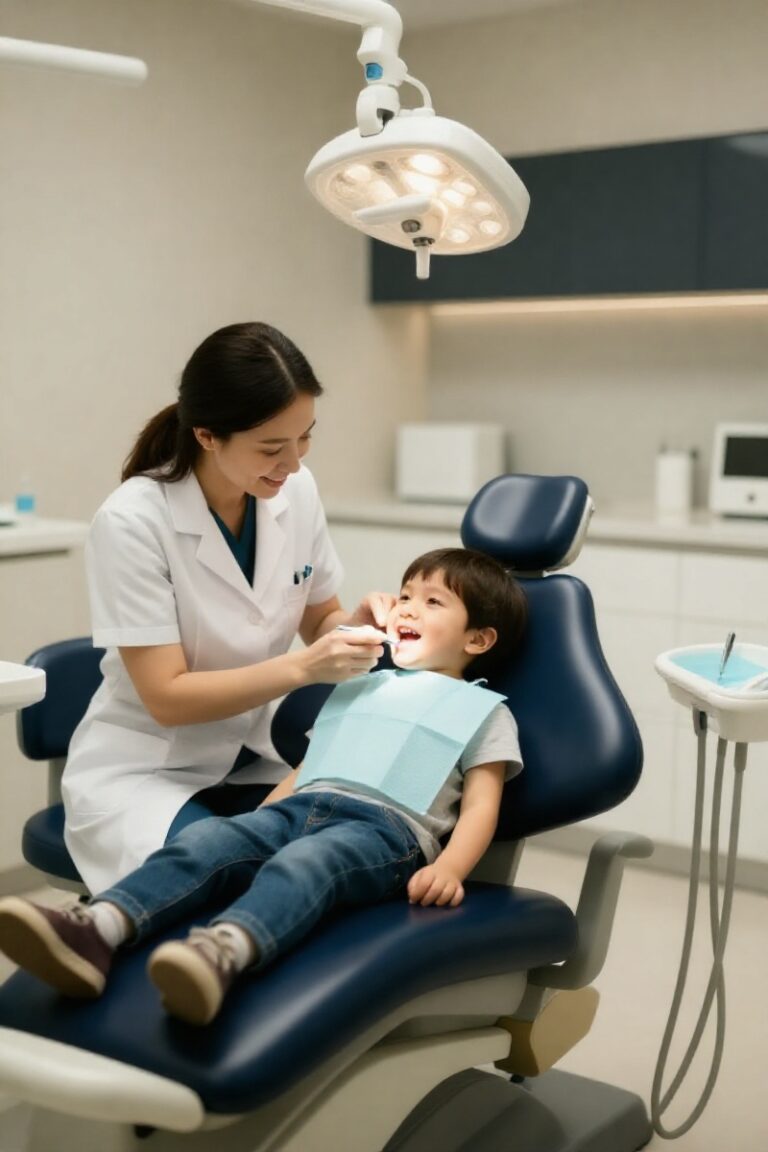
The first dental visit is typically short and informal — think of it as a “well-baby” check-up for your child’s mouth. There’s nothing to fear. Here’s what usually happens:
- Medical & Dental History: The dentist will ask about your child’s overall health, any medications, and family dental history.
- Gentle Oral Examination: With your child seated on your lap (knee-to-knee position), the dentist will examine the teeth, gums, jaw, and oral tissues for any signs of decay or developmental issues.
- Cleaning (if needed): A light cleaning with a soft brush or gauze may be performed. Fluoride varnish may be applied to strengthen enamel.
- Parental Guidance: The dentist will demonstrate proper brushing techniques, discuss teething, diet, fluoride needs, and habits like thumb-sucking or pacifier use.
- No X-rays at this age: X-rays generally begin around age 2.5 to 4, or earlier only if a specific problem is suspected. Pediatric dentists can typically see what they need visually.
The entire appointment usually lasts 30 to 45 minutes. The goal is to make it a positive experience — establishing what dental professionals call a “dental home,” a place where your child feels comfortable and safe receiving ongoing care.
How to Prepare Your Child for the First Dental Visit
Preparation is key to making the first dental visit stress-free for both you and your child. Research published in the National Center for Biotechnology Information (NCBI) emphasizes that an information booklet with suggestions for parents significantly improves a child’s cooperation during their first dental visit. Here are some proven strategies:
Read Books Together
Read children’s books about visiting the dentist to normalize the experience and reduce anxiety.
Play Pretend Dentist
Role-play a dental visit at home — count your child’s teeth and let them practice opening wide like a lion.
Stay Positive
Use positive language. Avoid words like “pain,” “hurt,” or “needle.” Say “the dentist will count your teeth!”
Schedule Smart
Book the appointment when your child is well-rested and happy — typically morning hours work best for toddlers.
The Importance of Baby Teeth: Why They Matter More Than You Think
Many parents assume that since baby teeth eventually fall out, they don’t need much care. This is one of the most harmful misconceptions in pediatric dentistry. Baby teeth, also known as primary teeth, play several critical roles in your child’s development:
| Function of Baby Teeth | Why It Matters |
|---|---|
| Chewing & Nutrition | Decayed teeth make eating painful, leading to poor nutrition and slower growth. |
| Speech Development | Teeth help children form sounds correctly. Missing or decayed teeth can cause speech impediments. |
| Space Holders | Baby teeth guide permanent teeth into proper position. Premature loss can cause crowding and misalignment. |
| Self-Esteem | A healthy smile contributes to confidence and social development in early childhood. |
| Jaw Development | Primary teeth support proper jaw bone growth and facial structure development. |
Tips for Preventing Cavities in Children
Tooth decay is the most common chronic childhood disease — five times more common than asthma. The good news is that it’s almost entirely preventable with the right habits established early. Here are the most effective cavity prevention strategies for children:
- Start Brushing Early: Begin cleaning your baby’s gums with a soft, damp cloth before teeth appear. Once the first tooth erupts, use a tiny smear of fluoride toothpaste (rice-grain size) on a soft-bristled baby toothbrush. At age 3, increase to a pea-sized amount.
- Avoid Putting Baby to Bed with a Bottle: Milk, formula, or juice pooled around teeth during sleep rapidly causes early childhood caries (ECC), also known as “bottle rot.” Only water should be given at bedtime.
- Limit Sugary Snacks and Drinks: Frequency matters more than quantity. Frequent exposure to sugar feeds acid-producing bacteria. Limit sweets to mealtimes and offer water between meals.
- Use Fluoride Appropriately: Fluoride strengthens tooth enamel and can even reverse early decay. Use fluoride toothpaste as soon as the first tooth appears, and ask your dentist about fluoride varnish applications.
- Consider Dental Sealants: Around age 6, when permanent molars appear, dental sealants can be applied to the chewing surfaces to block food and bacteria from settling into deep grooves.
Cavity Risk Reduction with Preventive Measures
Common Pediatric Dental Issues to Watch For
Being aware of common dental issues in children helps you catch problems early. Here are the most frequently encountered pediatric dental concerns:
Early Childhood Caries (ECC)
Tooth decay in children under 6. Often caused by prolonged bottle feeding, nighttime nursing, or excessive sugar. Affects nearly 1 in 5 children aged 2–5.
Thumb-Sucking & Pacifier Habits
Prolonged habits beyond age 3–4 can cause open bites, protruding front teeth, and crossbites. Your dentist can advise on gentle weaning strategies.
Teething Discomfort
Teething can cause irritability, drooling, and mild fever. Chilled teething rings and gentle gum massage can soothe discomfort. Avoid teething gels with benzocaine.
Delayed Tooth Eruption
If no teeth appear by 12–15 months, consult your dentist. Delays can indicate nutritional deficiencies, genetic factors, or developmental issues requiring attention.
Tooth Trauma
Active toddlers are prone to falls. If a tooth is chipped, knocked loose, or avulsed (knocked out), contact your dentist immediately. Time is critical for re-implantation.
Gingivitis in Children
Red, swollen, or bleeding gums can signal early gum disease. Poor brushing, mouth breathing, and certain medications increase the risk. Regular cleanings resolve most cases.
Most Common Pediatric Dental Issues (by prevalence)
“Early dental visits don’t just protect tiny teeth — they build confidence, eliminate fear, and establish a foundation of preventive care that lasts a lifetime.”
Meet Your Child’s Dentist
Dr. (Mrs.) Priyanka Chaturvedi
Endodontist & Aesthetic Dentist
BDS — SRM University, Chennai
MDS — SPPGI, Lucknow
Dr. Priyanka Chaturvedi brings advanced expertise in endodontics and aesthetic dentistry, combined with a gentle, child-friendly approach. She understands that children need patience and positivity, and she takes the time to make every young patient feel safe and comfortable. Her philosophy is simple: every child deserves a dental experience that builds trust, not fear.
Key Takeaways
Establishing good dental habits early is one of the most important gifts you can give your child. Here’s a summary of the essential points from this pediatric dentistry guide:
- Schedule by age 1 or within 6 months of the first tooth: This is the gold standard recommendation from the AAPD, ADA, and AAP.
- The first visit is a “well-baby” check-up: It’s gentle, quick, and focused on education and prevention — not treatment.
- Baby teeth are essential: They support nutrition, speech, space for permanent teeth, and self-confidence.
- Prevention is powerful: Fluoride, sealants, proper brushing, and smart nutrition reduce cavity risk by up to 80%.
- Build a dental home: Consistent visits to the same dentist create familiarity, trust, and a comprehensive oral health record for your child.
Ready to Schedule Your Child’s First Visit?
At The Crown Multispeciality Dental Clinic & Implant Center, we specialize in making dental visits positive, gentle, and educational experiences for children of all ages. Dr. Priyanka Chaturvedi and our team are here to ensure your child’s smile gets the best possible start.
Related Articles

Smile Design: How Aesthetic Dentistry Can Transform Your Confidence
Celebrating 5 Years of Clinical Excellence Smile Design: How Aesthetic Dentistry Can Transform Your Confidence A radiant smile…
When Should Your Child First Visit the Dentist? A Parent’s Guide
Celebrating 5 Years of Clinical Excellence When Should Your Child First Visit the Dentist? Patient Education • 8…

10 Daily Habits for a Lifetime of Healthy Teeth and Gums
Celebrating 5 Years of Clinical Excellence 10 Daily Habits for a Lifetime of Healthy Teeth and Gums Your…